Designing the future of title search
A leading title-search technology company asked our team to reimagine its established search platform. The product contained an unmatched depth of property data, but years of growth had produced a fragmented experience that was difficult to learn, slow to navigate, and heavily dependent on user memory. As UX Director, I led the project’s direction and client collaboration while staying deeply involved in the interaction and visual design of its most important workflows.
- Role
- Design Director
- Team
- UX research, product design, project management, and technical strategy
Overview
Leading the transformation of a complex, expert workflow.
Background
A leading title-search technology company asked our team to reimagine its established search platform, which held an unmatched depth of property data. Over a multi-month engagement, we researched how title professionals worked, developed and tested new product concepts, and designed a future-state platform that made complex searches more focused, consistent, and trustworthy.
Problem
Years of growth had produced a fragmented experience that was difficult to learn, slow to navigate, and heavily dependent on user memory.
My role
I set the overall project plan and design direction. I planned, designed, and facilitated the strategy workshop; led weekly working sessions, client-leadership conversations, and the final presentation; and coached a junior designer throughout the engagement.
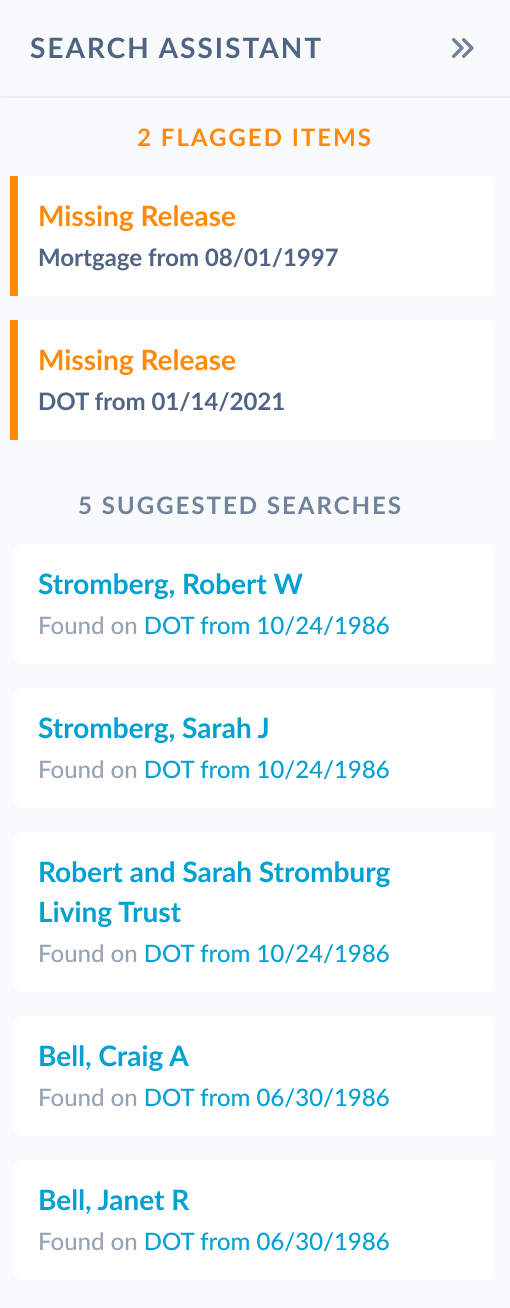
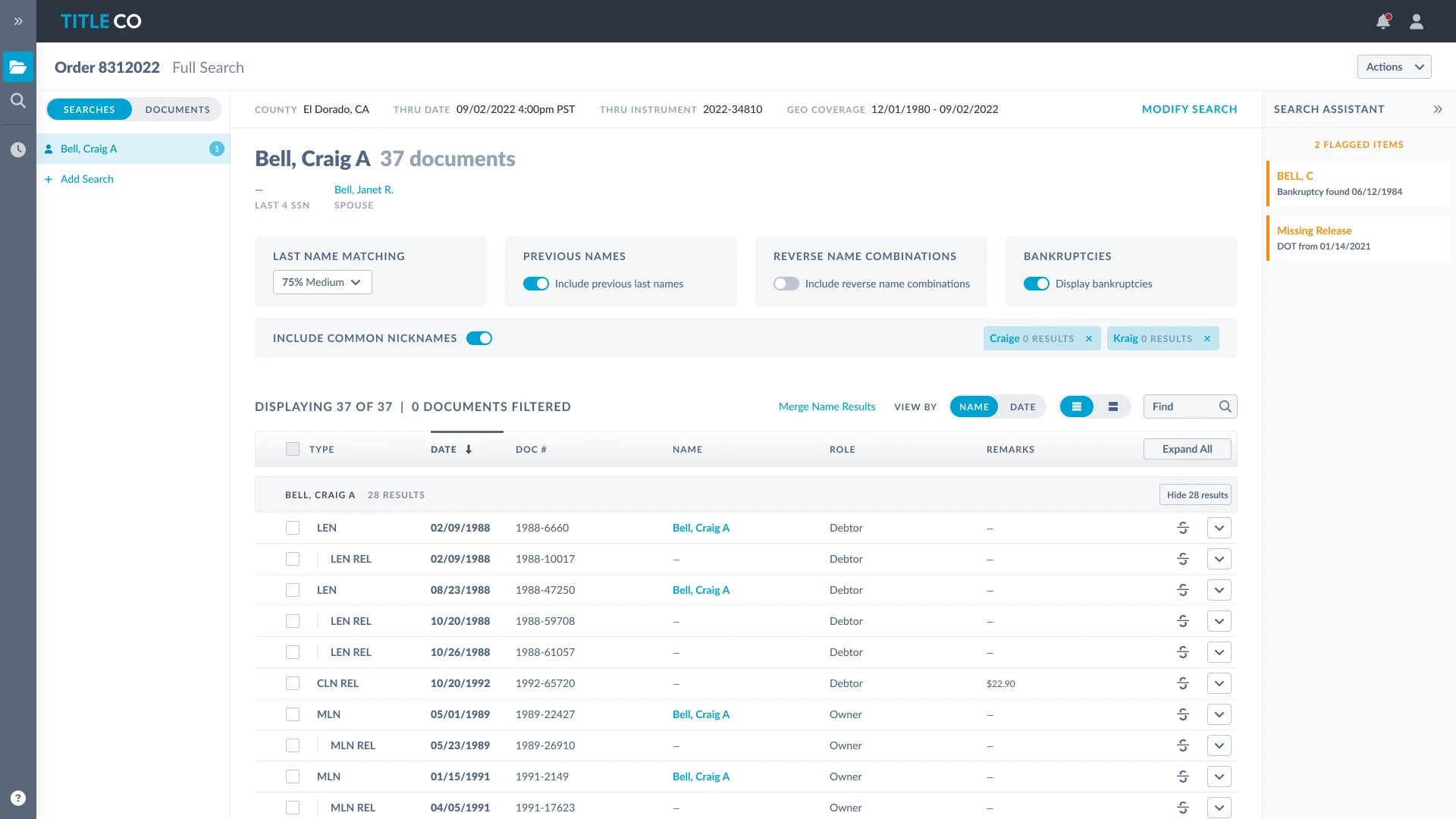
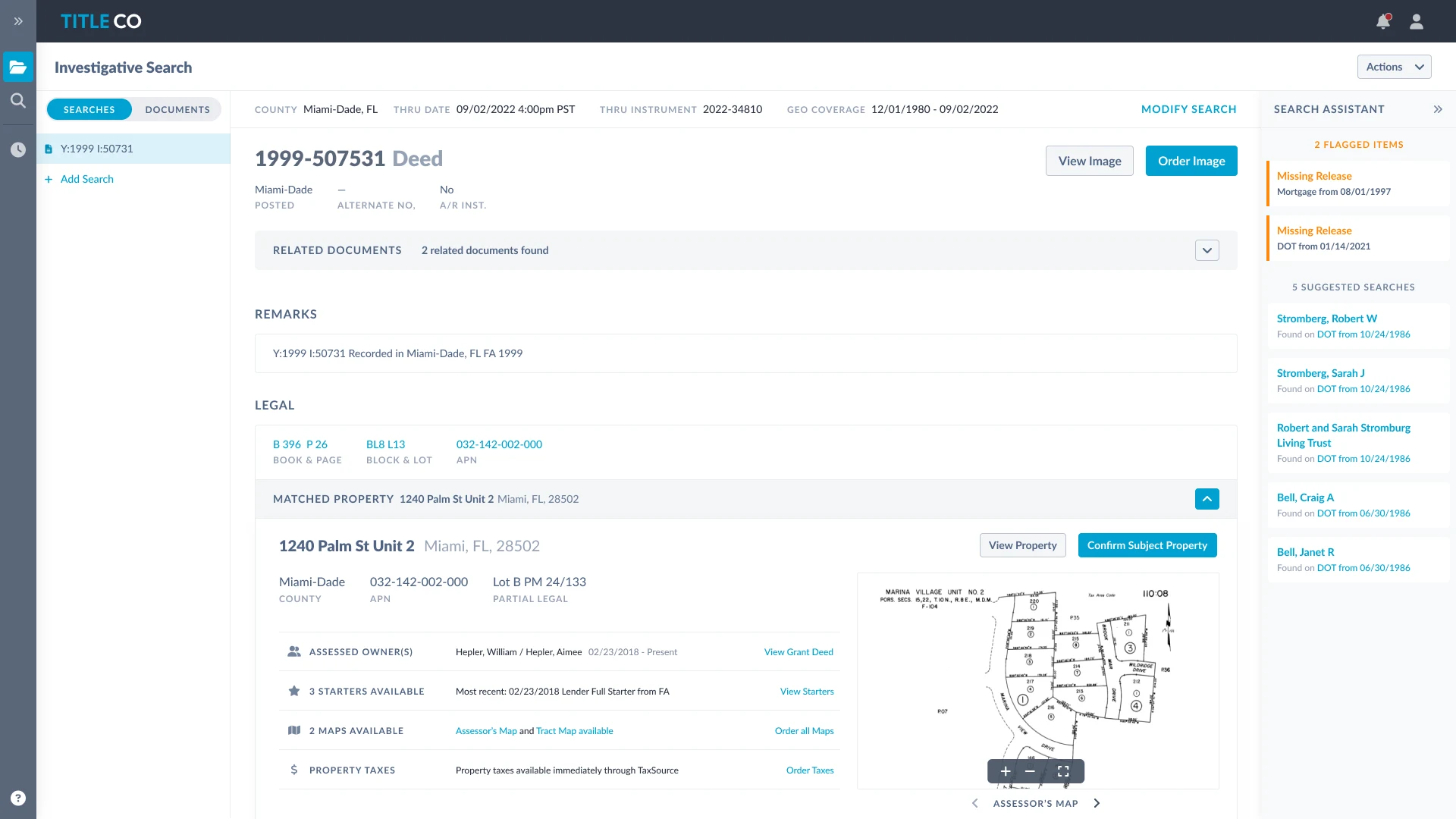
I also remained hands-on, owning the detailed interaction and visual design for major parts of the experience. These included order management, delivery workflows, the document viewer, the platform’s overall navigation and interface architecture, and a search assistant designed to guide users through complex work without replacing their judgment.
Results
- ShippedParts of the redesignParts of the redesigned experience shipped. Later business decisions changed the broader product strategy, and some capabilities became standalone products.
- VisionA shared product directionA detailed product vision, tested workflow designs, visual design direction, and prototypes.
- FoundationComponent libraryDocumentation and a foundational component library to build on.
Challenge
Modernize a powerful legacy platform without losing the control and trust expert users depended on.
Specialized, high-stakes work
Title examination is specialized, high-stakes work. Examiners must find, interpret, and connect records from multiple sources to establish the history of a property and identify potential risks.
Power that was hard to reach
The existing platform was powerful, but much of that power was difficult to access. Experienced users relied on extensive training, memorized procedures, and personal workarounds. The behavior and presentation of data could also vary by geography, making already complicated workflows less predictable.
A higher bar than incremental fixes
The company wanted to look beyond incremental interface improvements and define a new standard for title search, one that preserved the control experts needed while making the work faster, clearer, and easier to learn.
Approach
The problem was larger than usability, so we started with how examiners think and work, agreed on principles, then designed and tested.
Research
Our team interviewed 13 platform users and 13 internal stakeholders. Participants walked us through real title-search workflows, explained how practices differed across states and counties, and demonstrated the other tools and workarounds they used to complete their jobs.
Several themes emerged:
- The platform placed significant learning and memory demands on users.
- Searchers frequently moved between different search types, data sources, documents, and external tools.
- Inconsistent terminology and regional data conventions made results harder to interpret.
- Slow or unclear system behavior reduced confidence and interrupted users’ flow.
- Experts wanted assistance, but they did not want opaque automation making consequential decisions for them.
- Strong underlying data remained one of the company’s greatest advantages.
We needed to reorganize the experience around how examiners thought and worked while creating a foundation that could accommodate better automation over time.
Strategy
I designed and facilitated a strategy workshop that brought the core client and project teams together to work through the research, identify the most important opportunities, and agree on priorities for concept development.
We established a set of principles for the future experience:
- Unify fragmented data and workflows.
- Reduce repetitive input and unnecessary movement between tools.
- Make important system behavior visible and understandable.
- Guide the work while respecting professional expertise.
- Use automation as an ally rather than a black box.
- Create consistent interaction patterns that could scale across regions and workflows.
These principles allowed us to move beyond a collection of feature requests. They gave the team a shared framework for evaluating ideas and making difficult design decisions.
Design
We explored how the platform could support the entire title-search process while helping users maintain context as they moved between orders, searches, records, and documents.
A connected workspace built around orders
Testing and refinement
We tested two initial concept directions with nine title-search and examination professionals. Their feedback helped us identify which ideas were valuable, which created uncertainty, and where expert users required more visibility or control.
We then converged on a single direction and tested more detailed workflows, including order management, title-chain interactions, different search types, document selection, image review, and delivery.
Participants responded positively to the way the design reflected an examiner’s thought process. Their feedback also helped us refine the balance between guidance and flexibility: the system could assist with complex work, but users still needed to understand and validate what it was doing.
Key moments
Four parts of the platform where the new direction came together.
A connected workspace built around orders
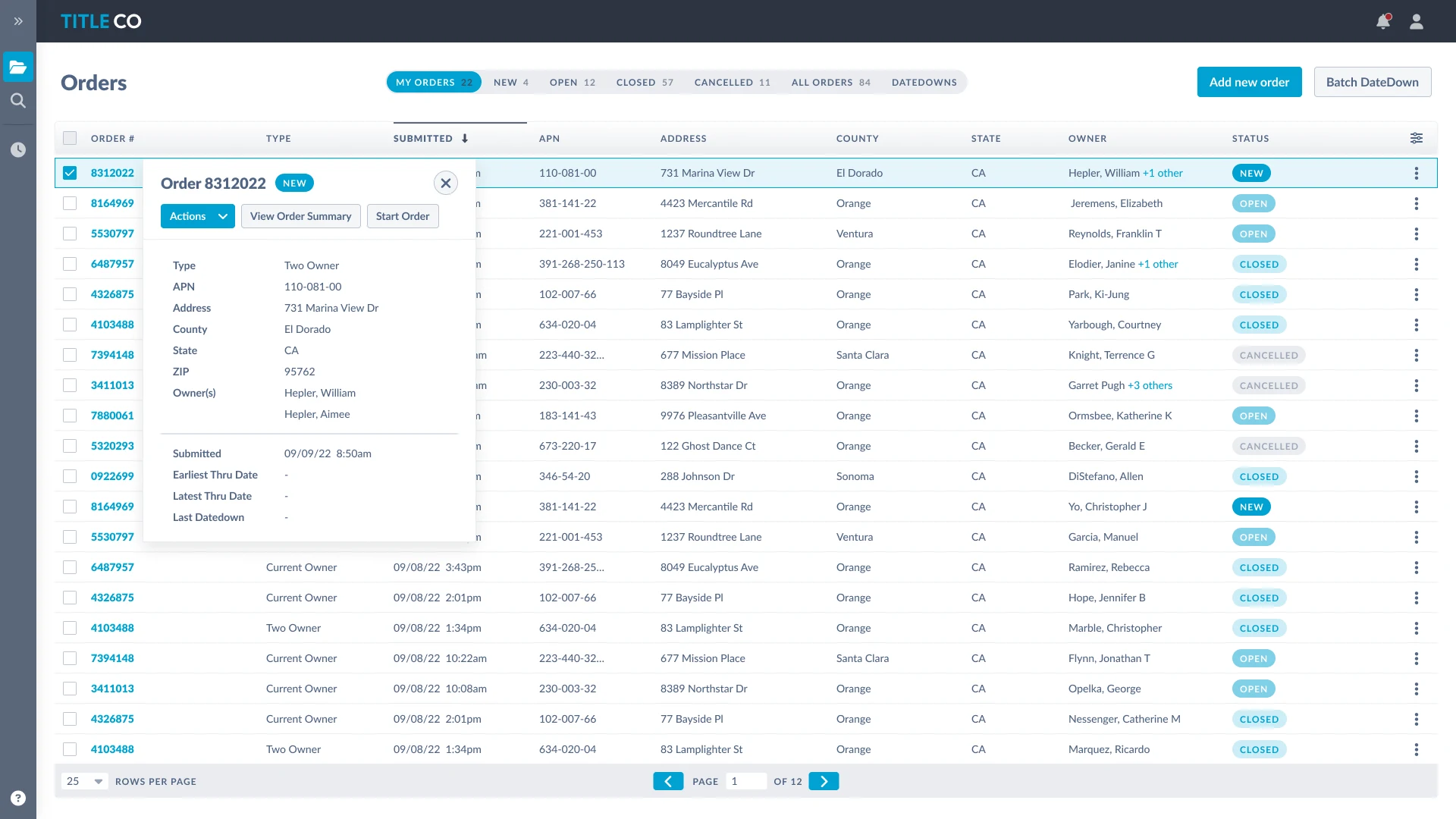
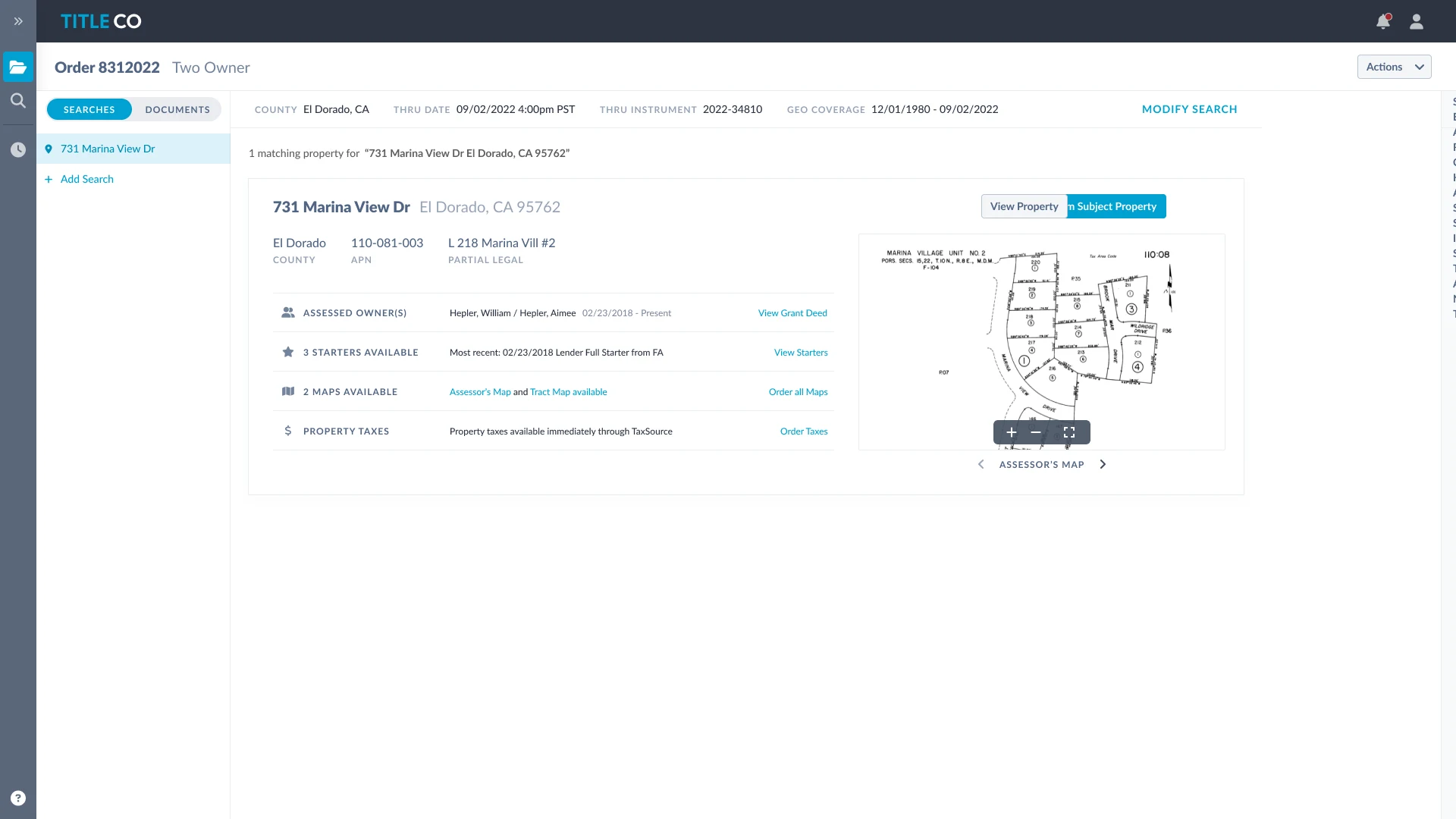
I designed the platform’s overall interface architecture and navigation model. The new structure brought orders, searches, documents, and delivery activities into a more consistent environment.
The order-management experience gave users a focused place to understand the status of their work, access active searches, and identify the next action required. Instead of forcing users to reconstruct context across disconnected screens, the workspace kept the property, order, and related activity together.
More usable title chains and search results
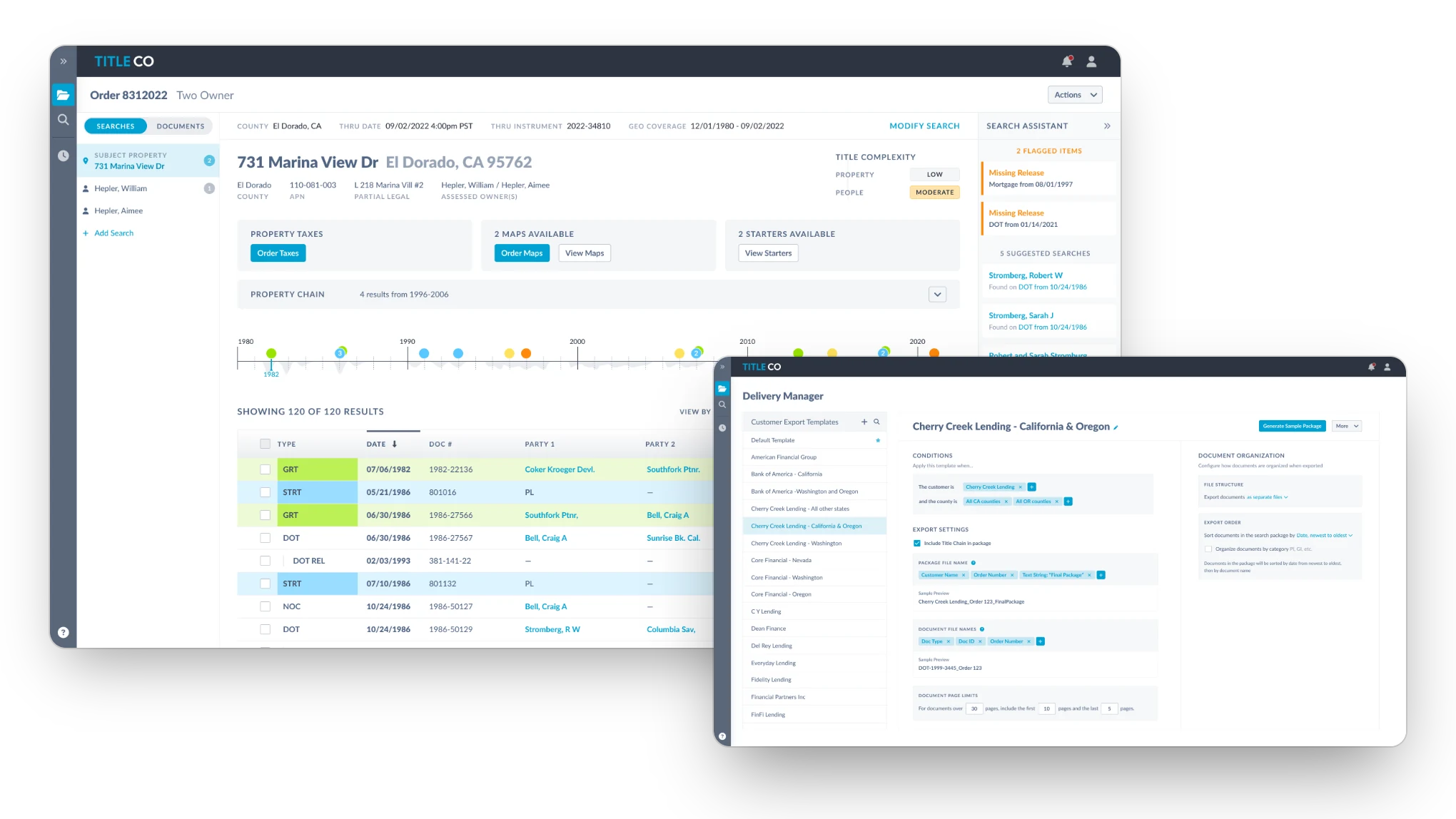
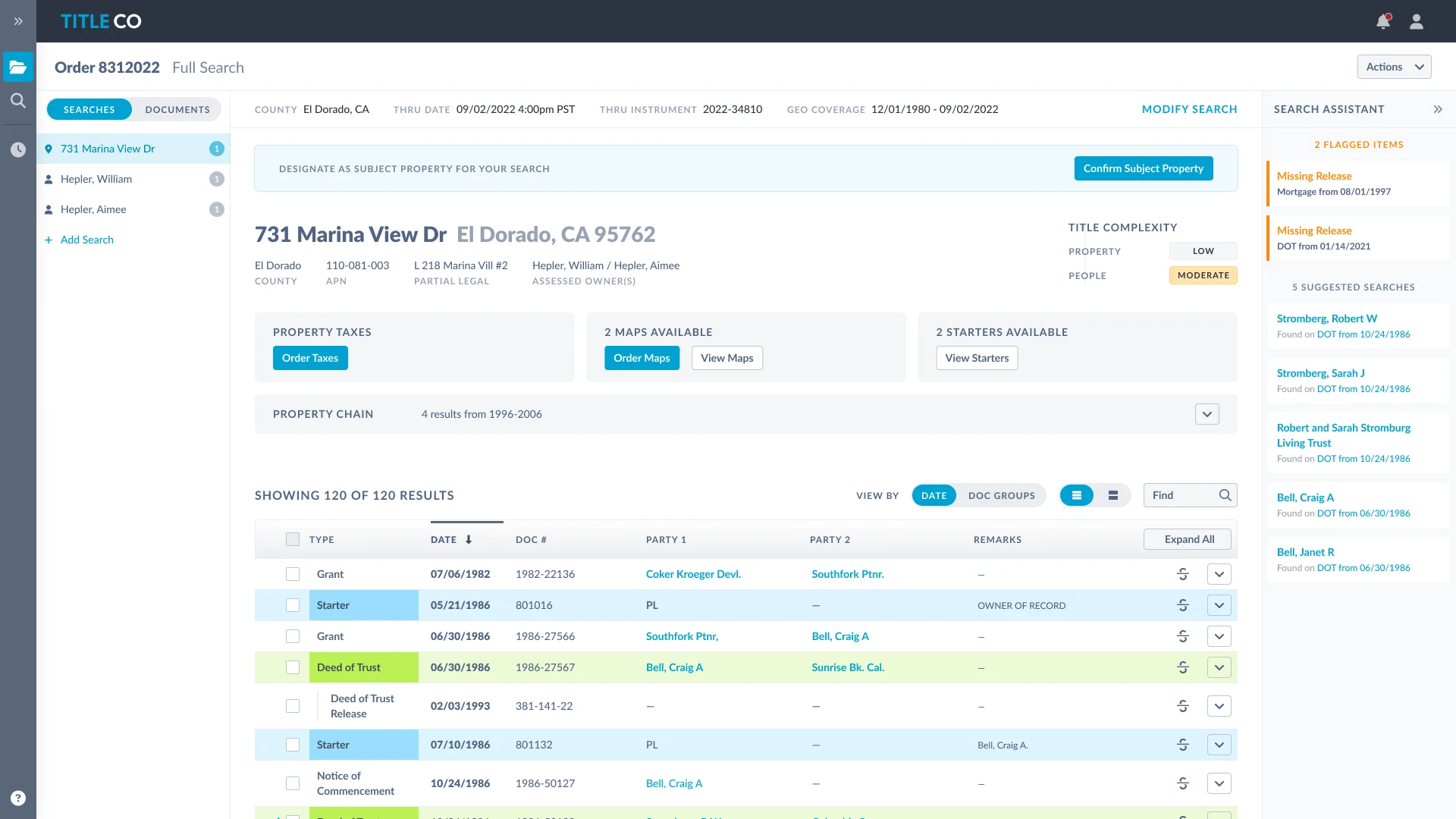
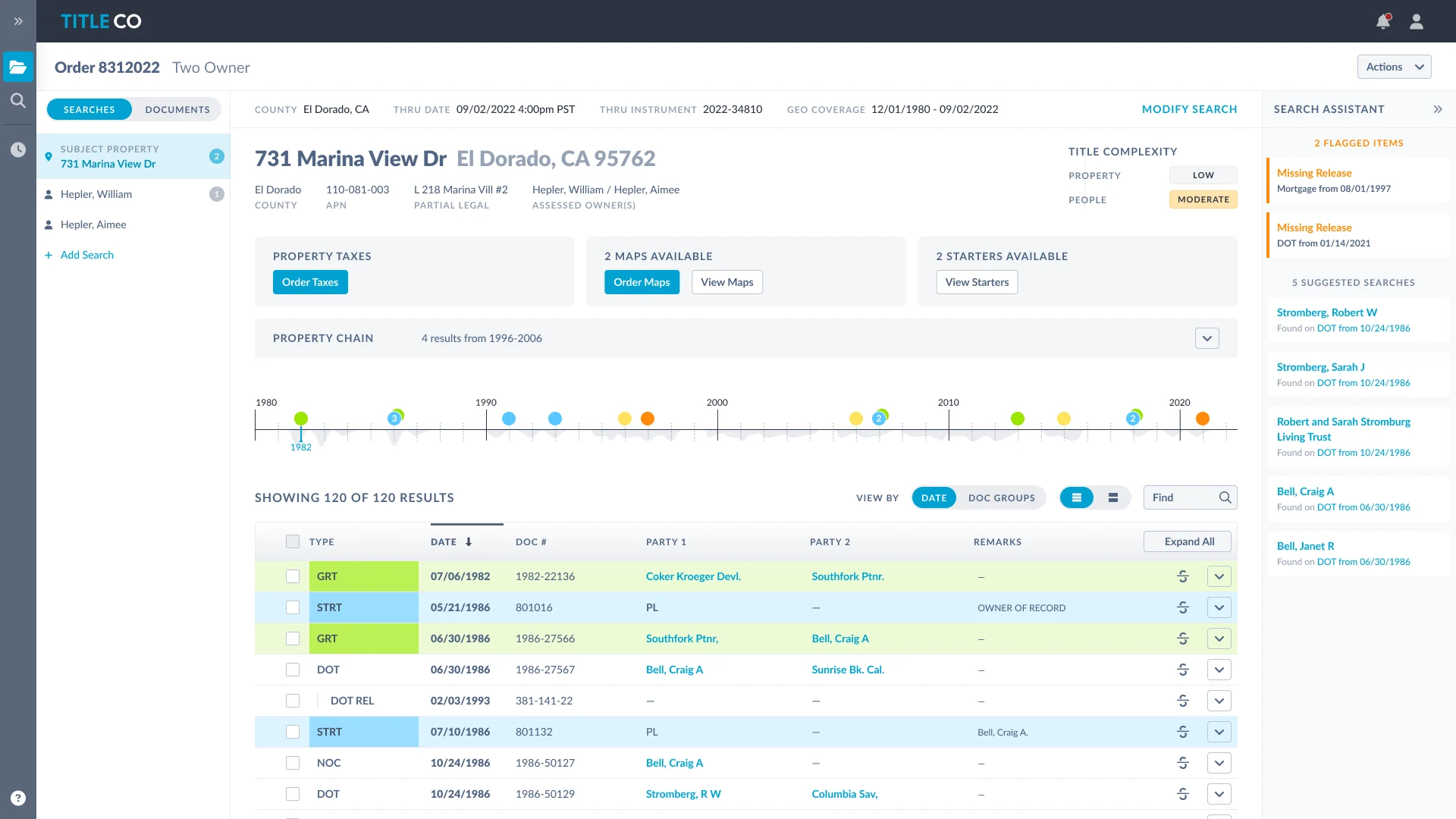
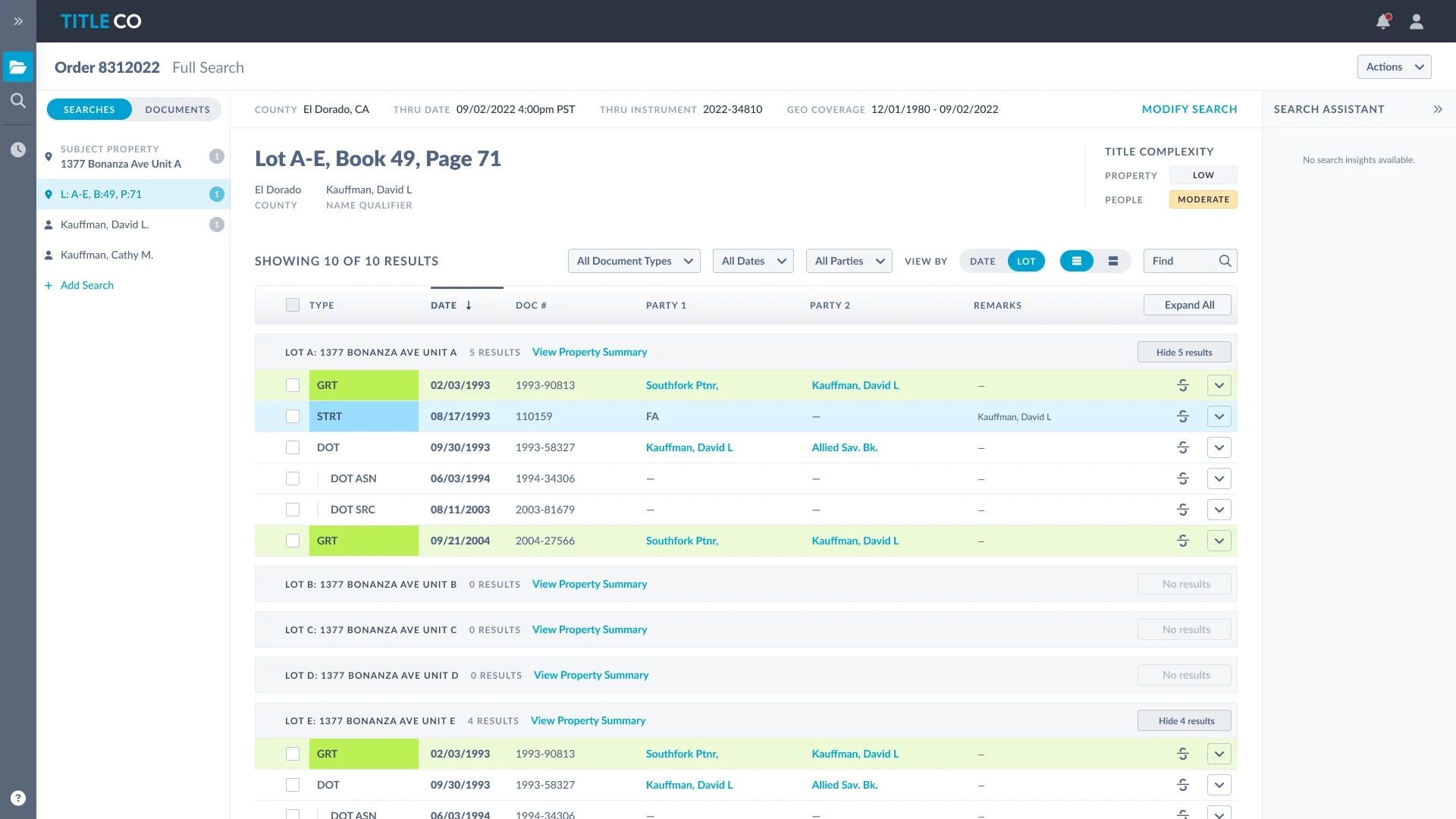
We created a consistent framework for reviewing title chains and working through large volumes of search data. The designs helped users identify important records, understand relationships between documents, and move between search results and source material without losing their place.
Assistance without removing control
The search assistant surfaced relevant guidance, potential issues, and suggested next steps at meaningful moments. The intent was not to automate expert judgment. It was to reduce memory burden and repetitive effort while making the system’s support visible and reviewable.
Integrated document review and delivery
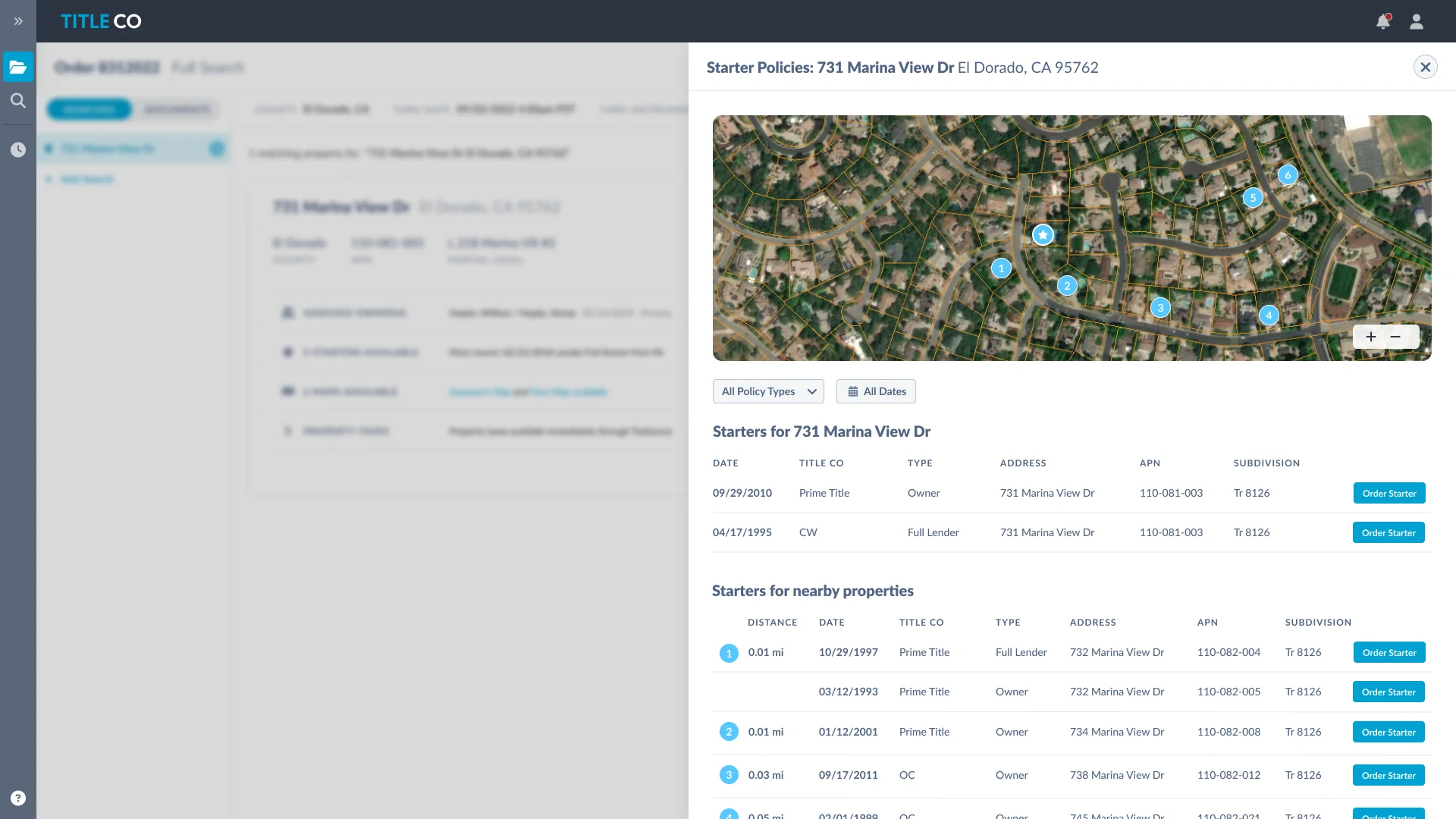
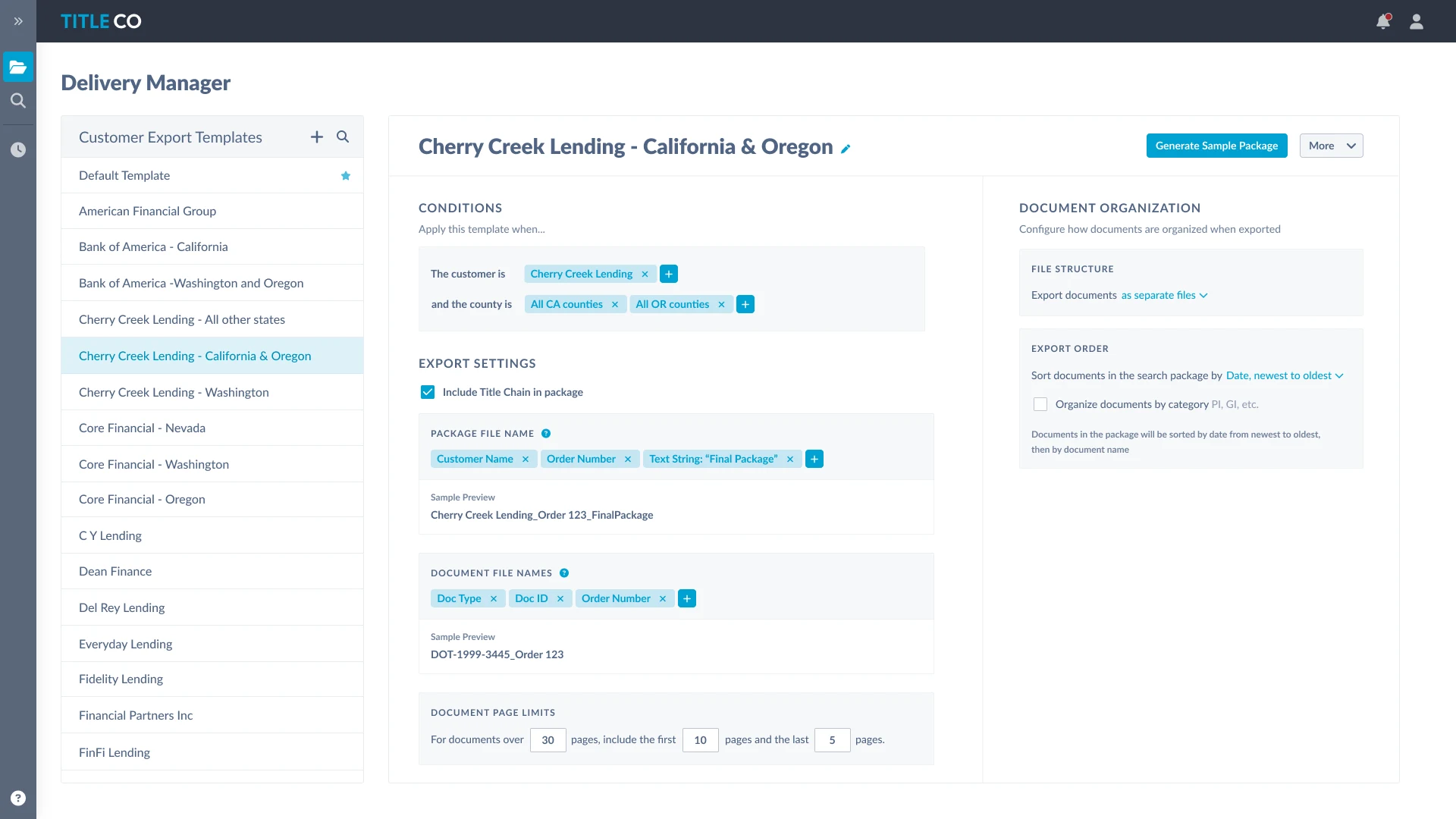
I owned the detailed design of the document viewer and delivery workflows. These concepts reduced the friction of requesting, reviewing, organizing, and preparing documents, activities that previously involved waiting, repeated selection, and movement into other software.
Impact
A practical design foundation and a shared vision for the future of title search.
Parts of the redesign shipped
Subsequent business decisions changed the broader product strategy, and some capabilities were separated into standalone products.
A design foundation
A detailed product vision, tested workflow designs, visual design direction, prototypes, documentation, and a foundational component library.
A shared vision for what’s next
By showing how fragmented workflows could become a connected, assistive experience, the designs spurred necessary conversations about the future of the platform. They helped the company begin preparing for greater automation and emerging possibilities in AI-assisted title search.
The result was both a practical design foundation and a shared vision for how a complex legacy product could evolve without losing the depth, trust, and professional control that made it valuable.